
When reasoning becomes interface
Exploring how models change the way we interact with systems—and what that means for design.
Traditional interfaces expose capabilities through controls. AI interfaces increasingly expose them through language, examples, and negotiation.
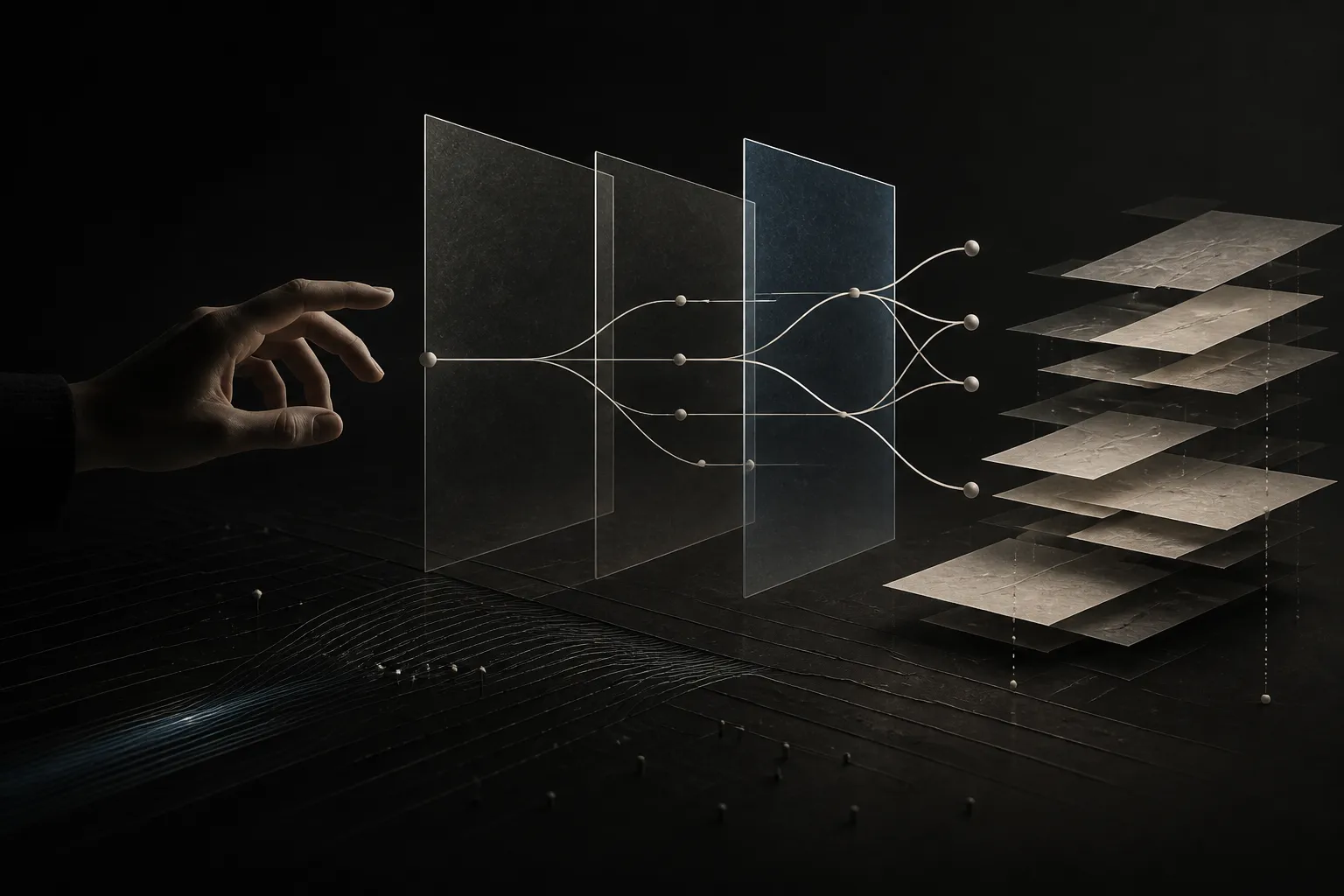
From commands to interpretation
A button is explicit about what it will do. A model is explicit about very little. It interprets a request, constructs a plan, and produces an answer whose boundaries may only become visible after something goes wrong.
Designing this interaction requires more than a polished prompt box. People need to understand what the system inferred, what evidence it used, and which parts of the result remain uncertain.
Interface as shared reasoning
The strongest AI products make intermediate thinking inspectable without turning every interaction into a technical audit. They provide just enough structure for a person to redirect the system while the cost of changing direction is still low.
This suggests a new interface material: not conversation alone, but editable reasoning expressed through plans, sources, constraints, and reversible actions.