
Sara
AI that assists reading without doing the thinking for you.
readsara.com · app.readsara.com
Sara started as a solo MVP. I built it with AI to test a research claim, not to wrap another chatbot around a book: does making someone retrieve, explain, and practice beat giving them a summary?
Problem
Most AI reading tools give you the answer so you never form one. A ChatGPT summary of a Basecamp chapter feels clear until you try to explain the idea without reopening the tab. That feeling is familiarity, not understanding.
Understanding is produced by retrieval and restatement. AI helps only when it withholds the answer long enough for you to generate your own.
Ship
Sara is a reader with a tutor. You import your own books (here: Basecamp’s Shape Up). Books and answers stay on the device. AI helps when you ask: Explain a hard passage, or Review a chapter from memory.
Design rule. AI may ask, check, and push. It should not write the explanation for you.
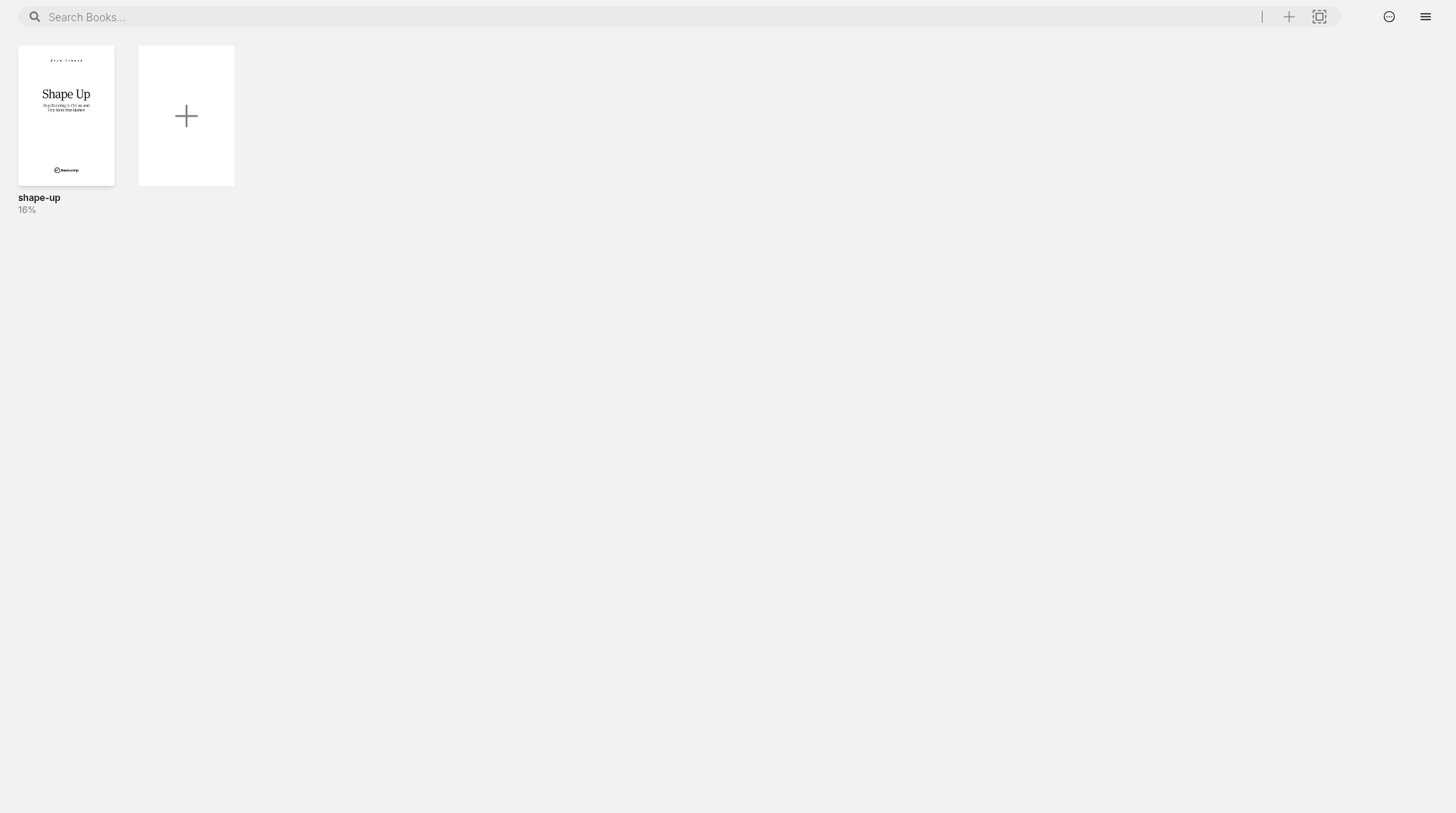
Library and open book
Import a book, open it, read like a normal reader. No summary wall before the first page.
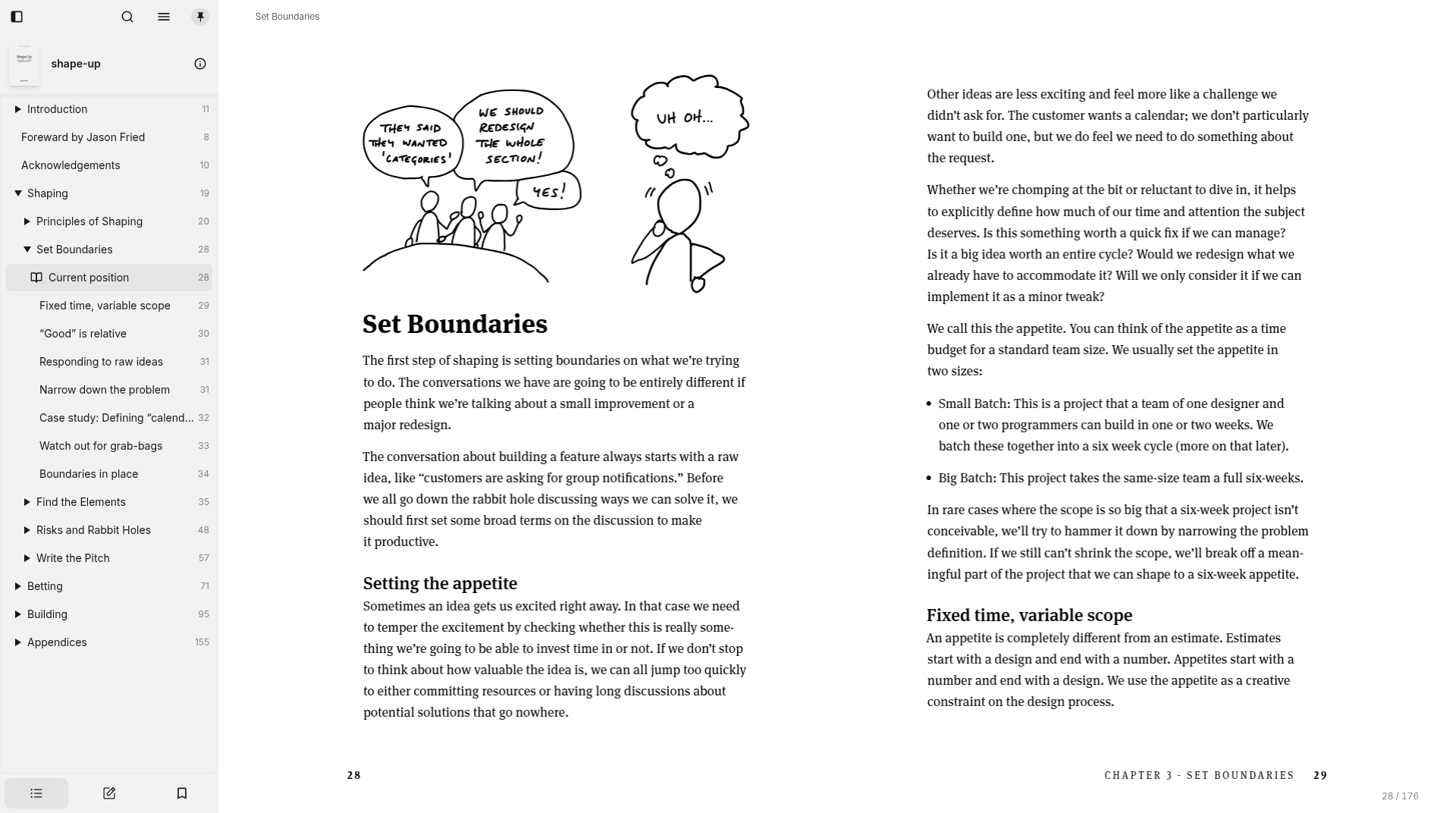
Explain a hard passage
Select the sentence that stopped you. Sara freezes that selection plus nearby chapter context, explains what it means here, and stays grounded for follow-ups. Not a generic web definition.
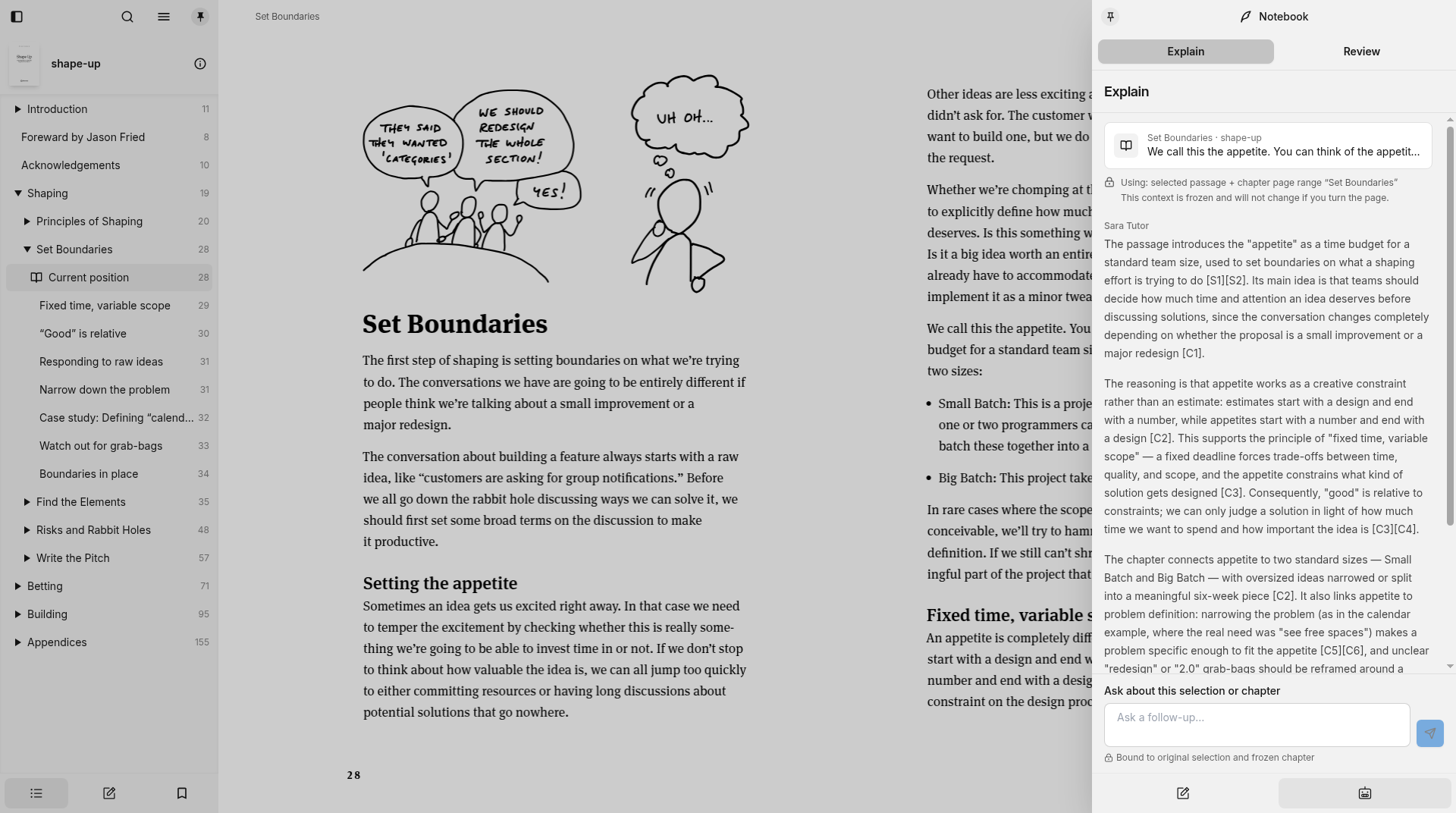
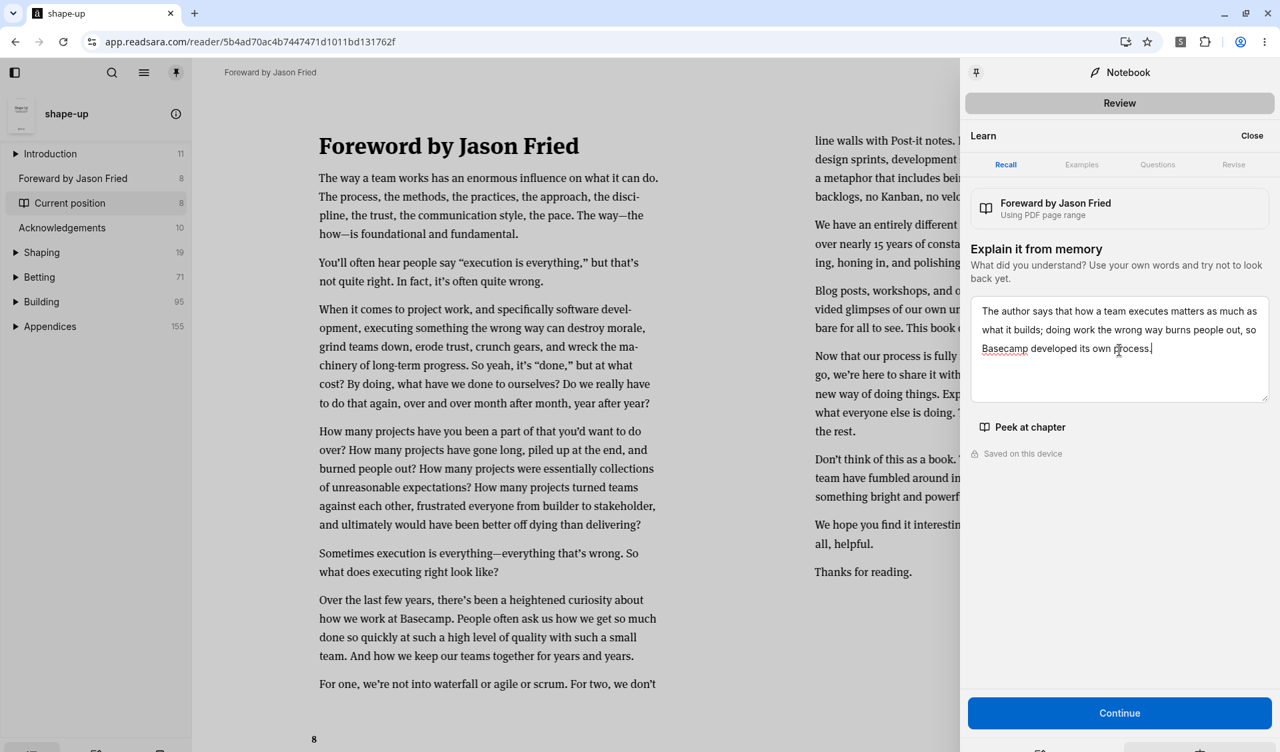
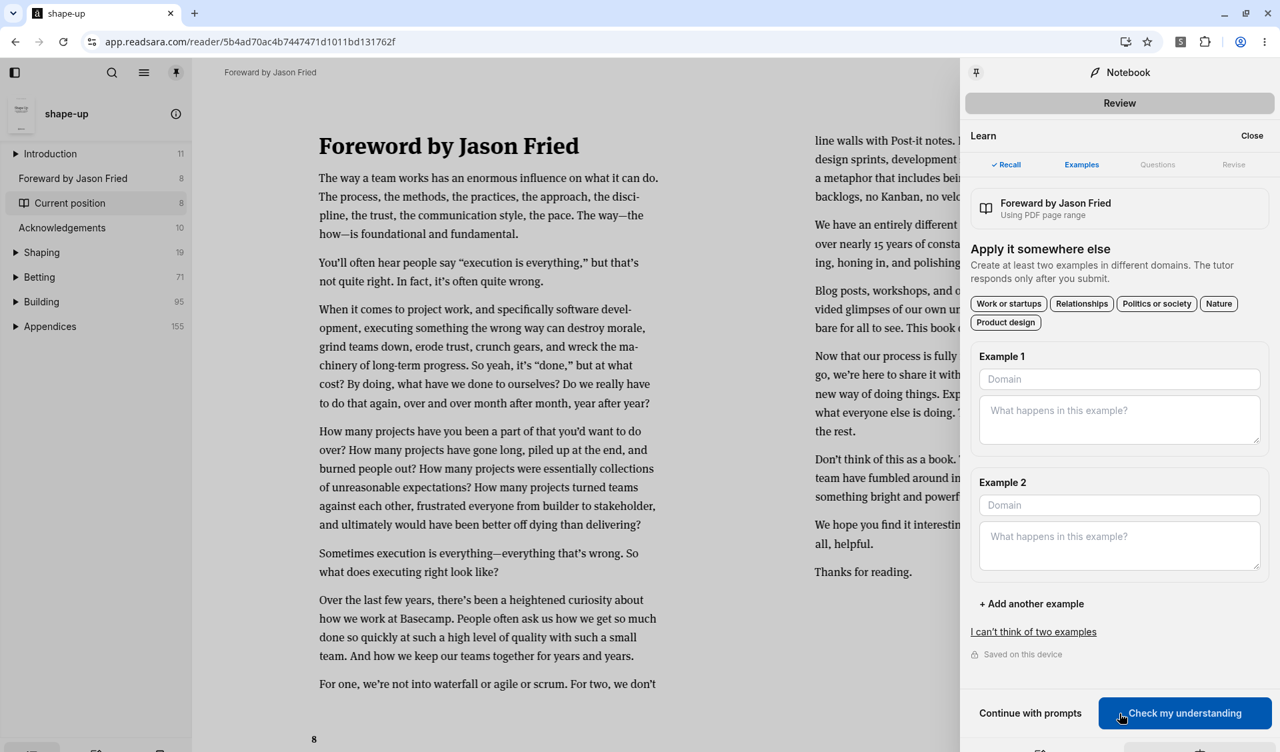
Review from memory: Recall → Examples → Questions → Revise
Start Review without an AI summary first. The loop is fixed.
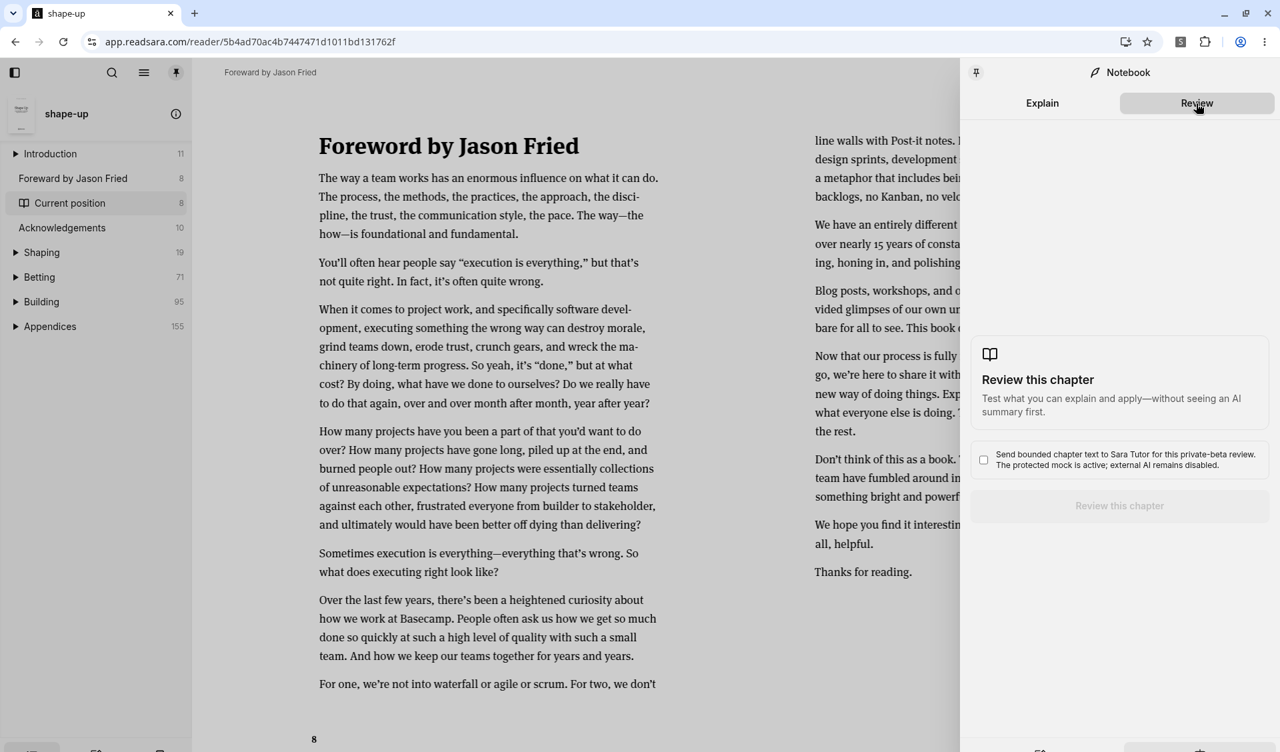
1. Recall. Write what you understood in your own words. Peek is optional. Sara does not draft the recall.
2. Examples. Invent at least two examples in different domains. The tutor responds only after you submit.
3. Questions. Short, targeted checks against the chapter (checkpoint around five; up to eight in one review).
4. Revise. After Questions, Sara shows where your recall or examples fell short, then asks you to rewrite the weak parts in your own words. You own the rewrite; the tutor does not draft it. When the rewrite is strong enough, the chapter review closes on this device.
Dictionary stays in the reading context when a word blocks the passage, not as a separate vocab drill. You can pause mid-Review and resume on the same device.
Why this works
The loops map to techniques cognitive psychology rates as useful, not to “AI tutor” marketing.
- Practice testing (high utility). Quizzing yourself beats rereading. Dunlosky et al. (2013) rate practice testing high across ages and contexts. Rowland (2014) finds testing vs restudy around g ≈ 0.50. Sara’s Questions step is practice testing with chapter-tied feedback.
- Self-explanation (moderate utility). Bisra et al. (2018) find prompts to self-explain around g = 0.55. Recall and Revise are structured self-explanation.
- Elaborative interrogation / transfer (moderate utility). Asking why, and applying ideas beyond the author’s wording, shows consistent benefits when prior knowledge can support them (Dunlosky et al., 2013). Examples across domains is that move.
- Feedback. Retrieval’s edge over other elaborative tasks is clearer with corrective feedback (Educational Psychology Review, 2025 meta-analysis). Sara assumes check-and-follow-up, not silent grading.
Rereading and highlighting rate low utility in the same Dunlosky review. Summaries are easy to confuse with understanding. Sara biases against that: your restatement is the deliverable.
Sources
- Dunlosky, J., Rawson, K. A., Marsh, E. J., Nathan, M. J., & Willingham, D. T. (2013). Improving students’ learning with effective learning techniques. Psychological Science in the Public Interest, 14(1), 4–58. PDF
- Bisra, K., Liu, Q., Nesbit, J. C., Salimi, F., & Winne, P. H. (2018). Inducing self-explanation: a meta-analysis. Educational Psychology Review. PDF
- Rowland, C. A. (2014). The effect of testing versus restudy on retention: a meta-analytic review of the testing effect. Psychological Bulletin.
- Retrieval practice versus elaborative encoding (2025). Educational Psychology Review. Springer