
Archive Usage Rights
A simpler way for brands to request permission to use creator content in ads.
Project snapshot
- Role: Product manager and product designer
- Team: One engineer, the CEO, and me
- Duration: 2–3 months
- Research: Around 20 customer onboardings, plus customer and creator interviews
- Result: Rewards increased adoption by about 30%. For customers with low approval rates, approvals rose from roughly 10% to 30%.
The problem
I onboarded around 20 customer teams, usually working with marketing leads and social-media managers. These sessions also helped me understand what customers did with the content Archive collected.
Before Archive, teams saved Instagram Stories to Dropbox and tracked posts in spreadsheets. Archive solved that part. But asking creators for permission was still manual.
Social-media managers opened creator profiles one by one, found the original post or an old screenshot, and sent an Instagram DM. This took time, approvals were easily lost, and the process did not scale.
Start with the request, not the management system
The first version tested two questions:
- Would companies request usage rights through Archive?
- Would creators approve those requests?
We left out TikTok, payments, and a separate page for managing requests. There was no reason to build a dashboard before customers had requests to manage.
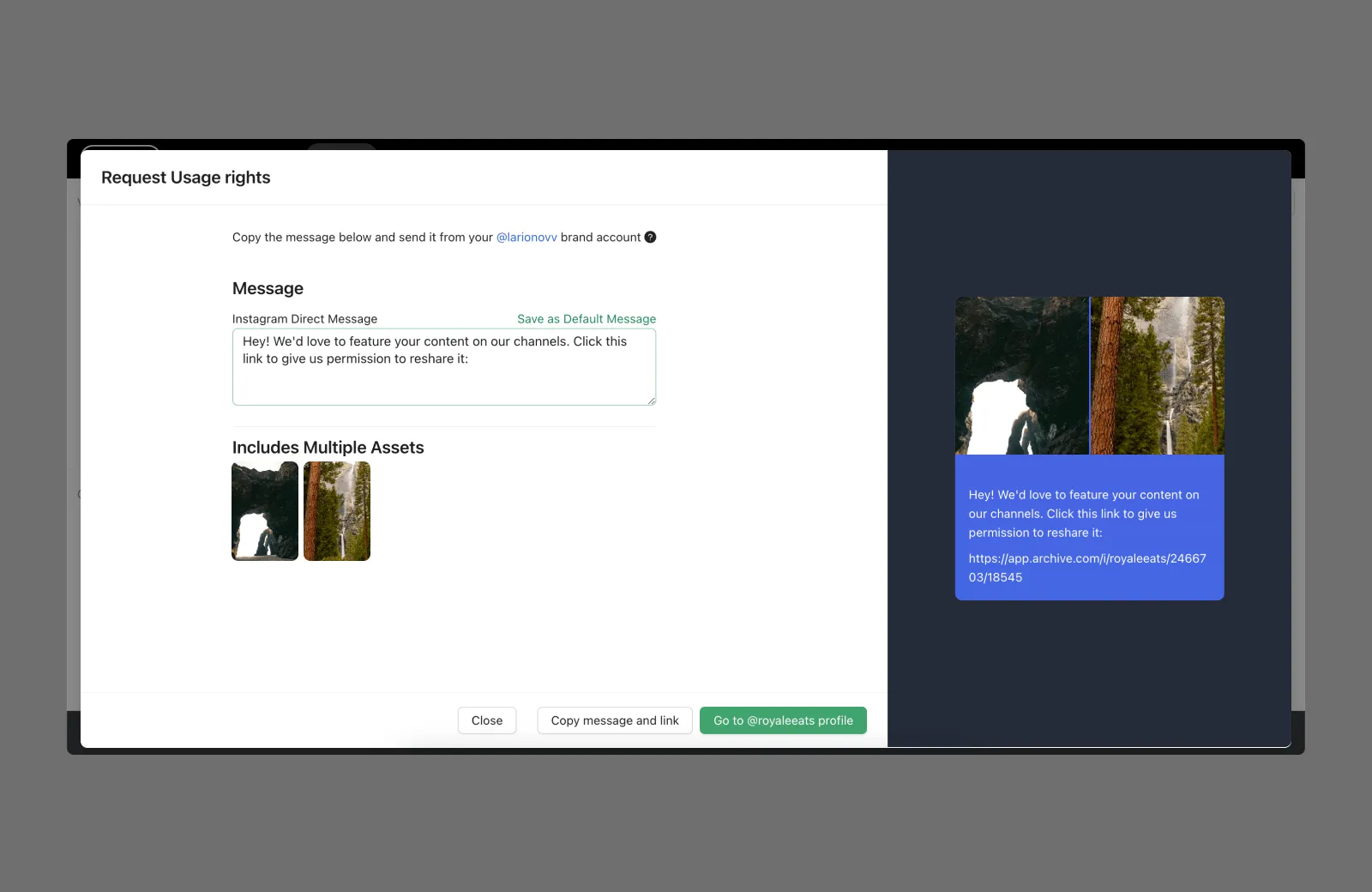
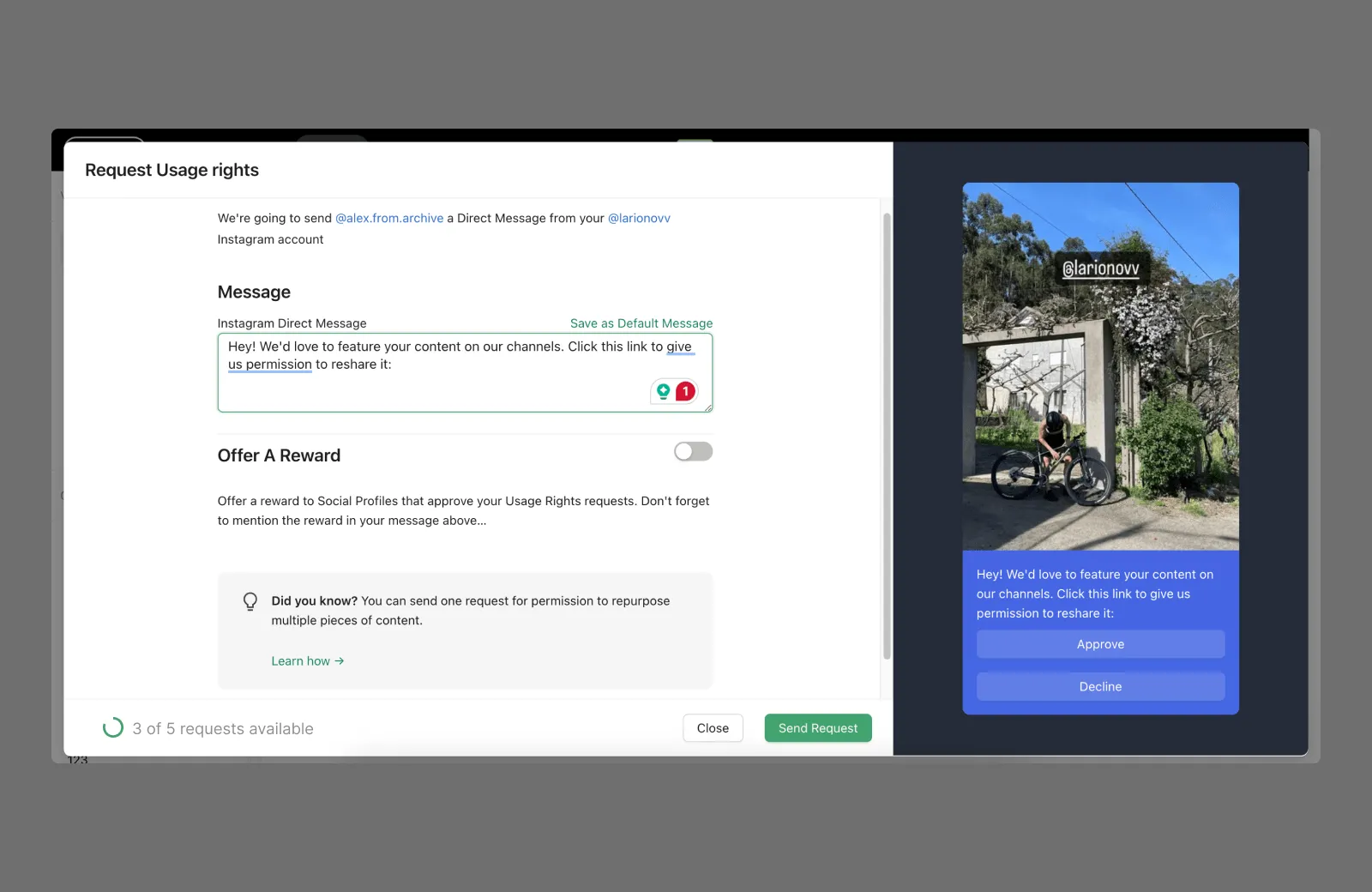
Customers selected an asset, created a shareable request, and saw its status on the existing content card.
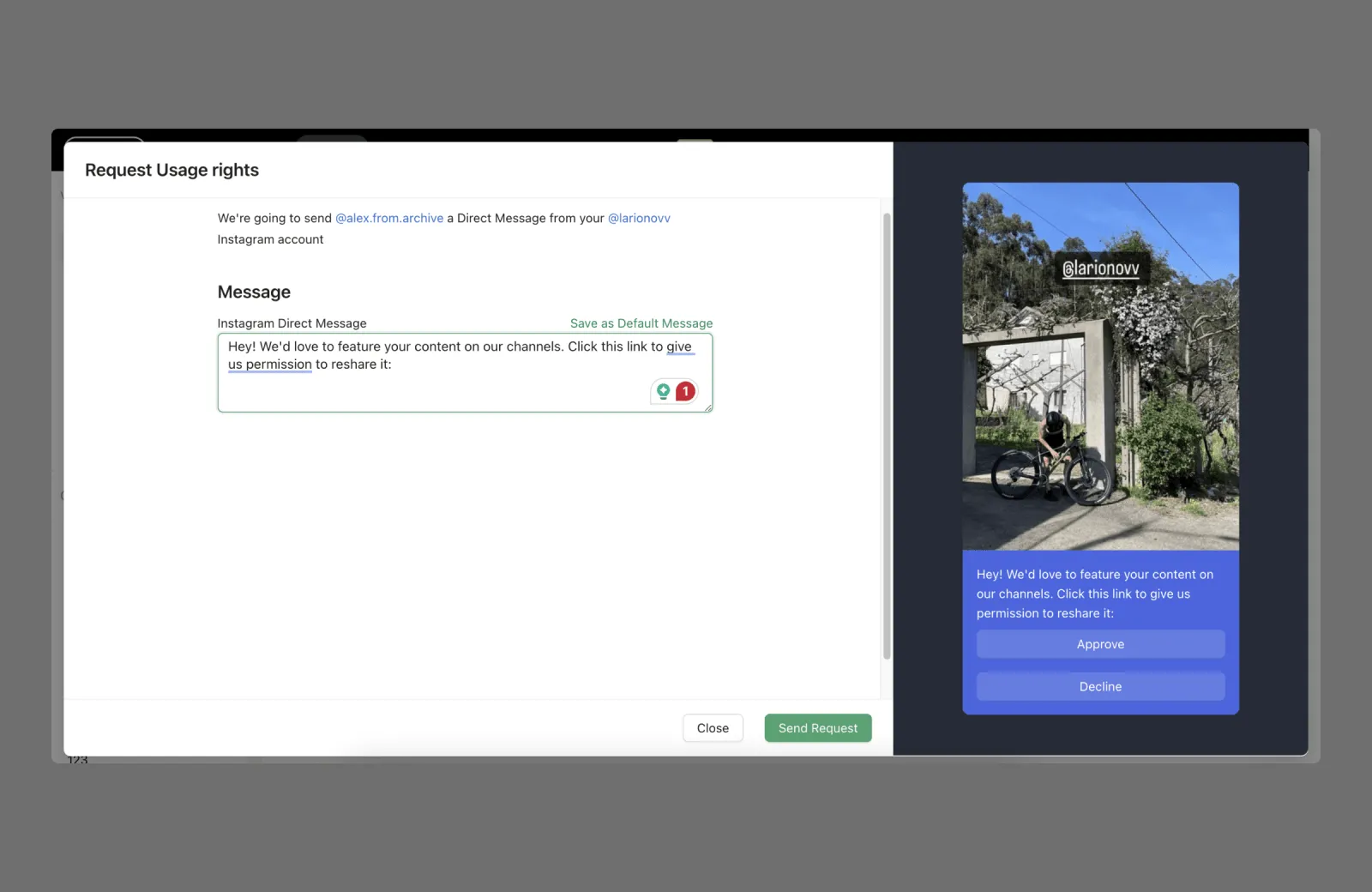
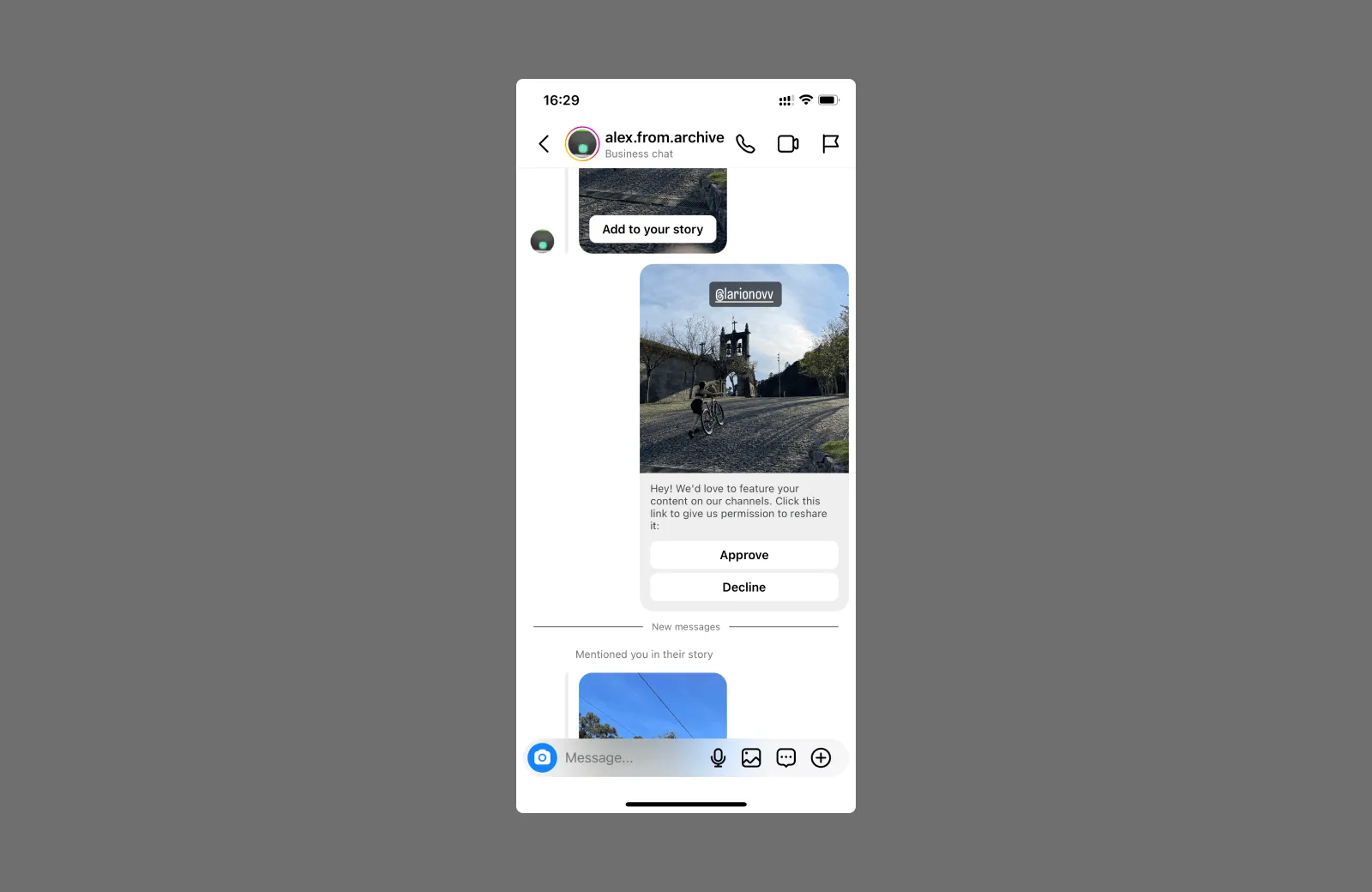
For one asset, the creator could approve or reject directly from the message.
Feedback changed the first release
I demoed the prototype to customers and spoke with several creators.
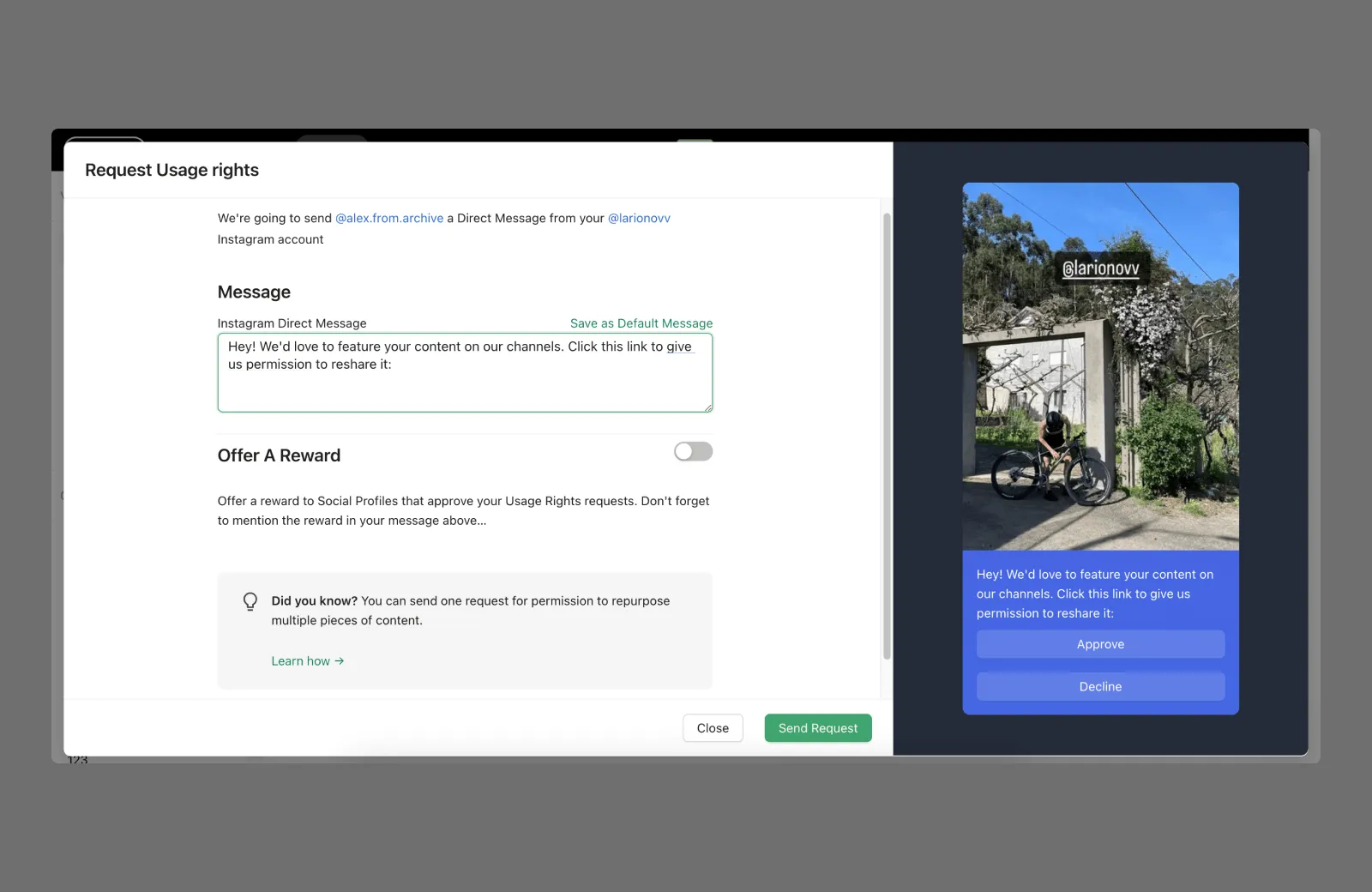
Creators wanted to know which company was asking for permission. We added the company logo and made the brand—not Archive—the clear requesting party.
Customers also needed to include terms and legal details. Instead of building contract management, I added a custom message field. They could describe the intended use and link to their own terms.
Bulk requests
We first tested the feature with the teams I had interviewed. By watching them use it, I learned that permission work was usually done as one batch task—not continuously throughout the day.
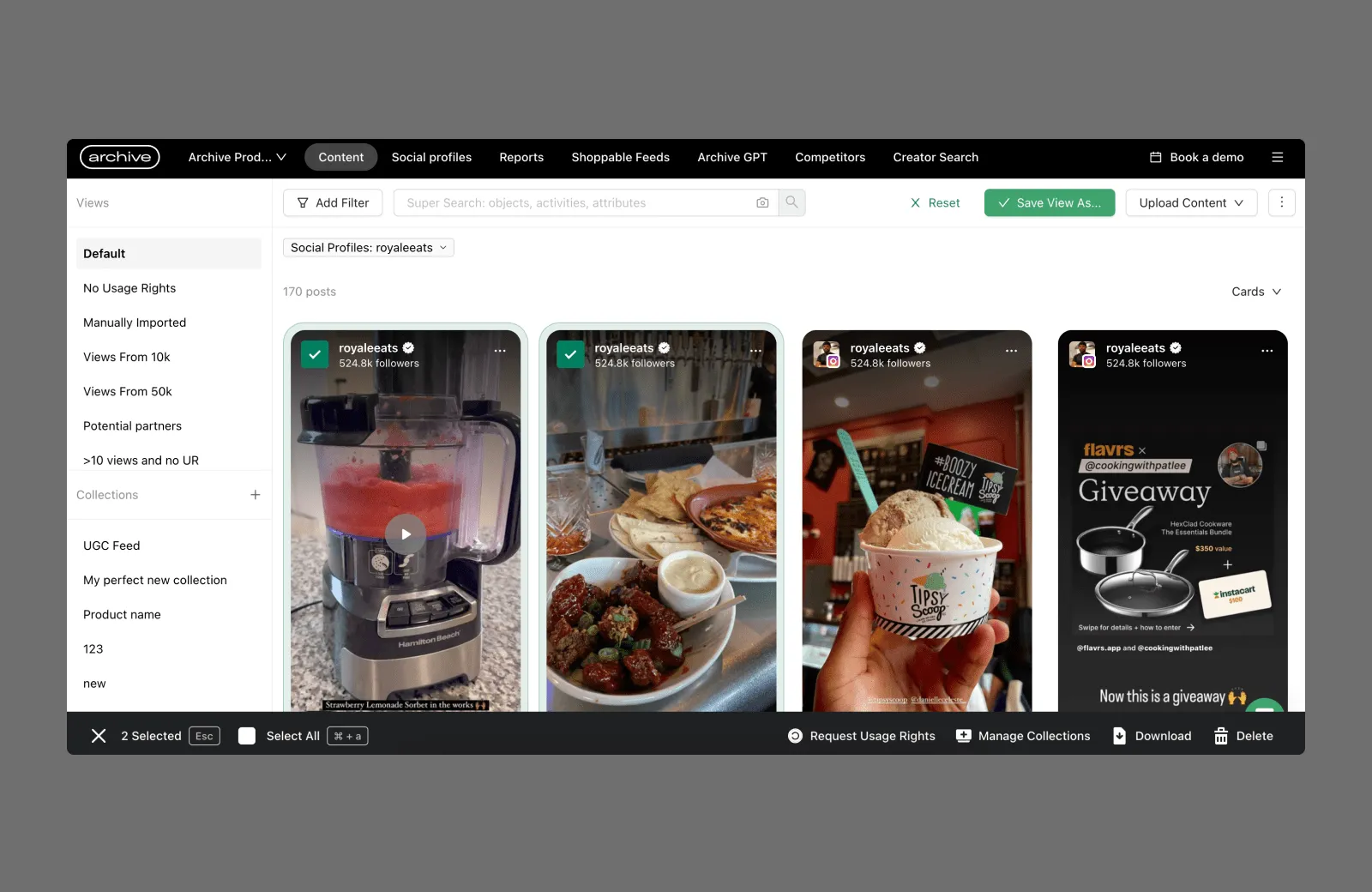
Instagram allowed only one preview image in a DM, so we generated a mosaic from the selected assets. The message opened a review page where the creator could approve the full batch or decide one asset at a time.
Rewards
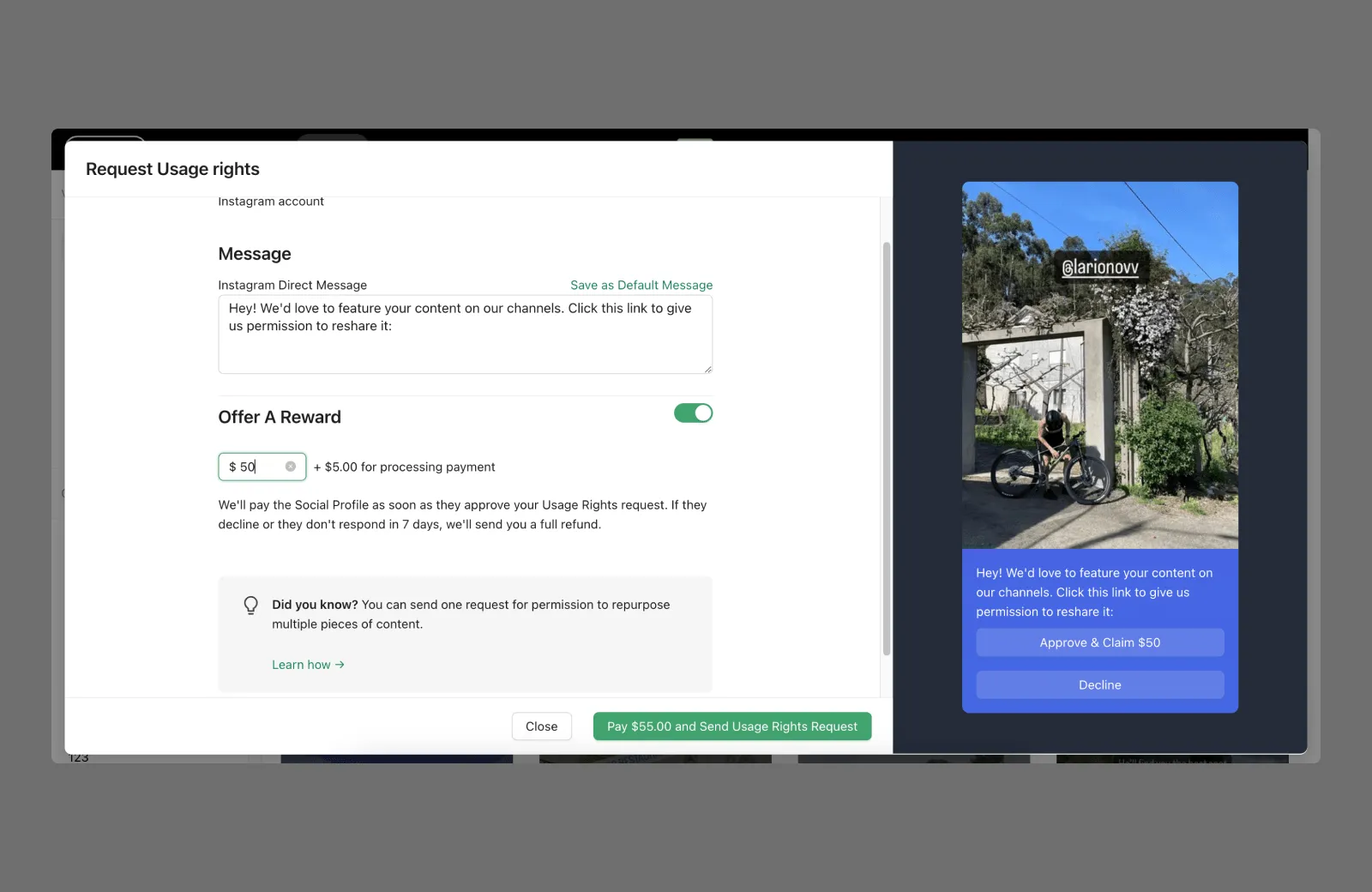
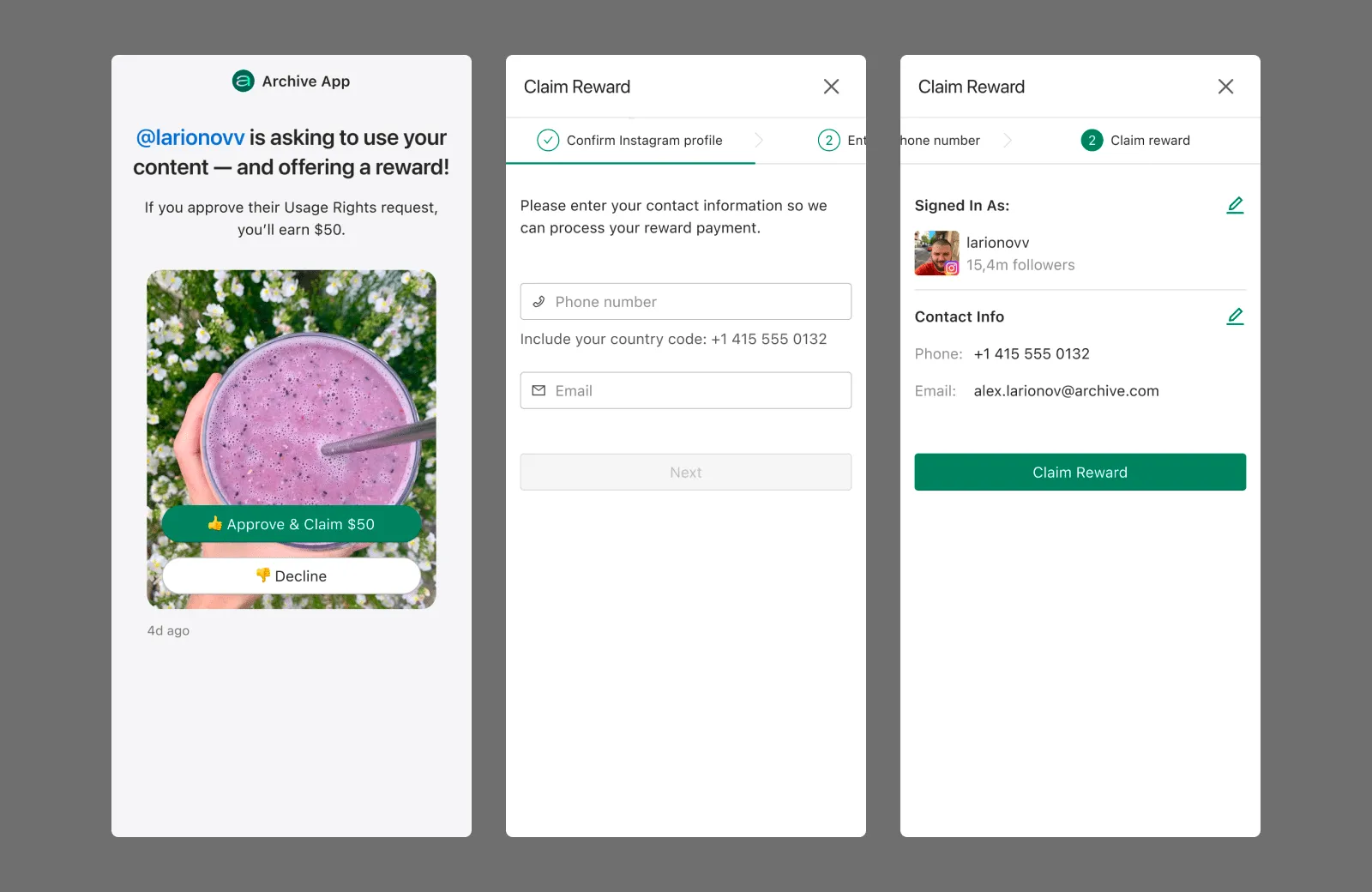
Further interviews showed that some companies already offered rewards. Others had low approval rates but found it difficult to pay many creators separately.
We integrated Tremendous. A company could attach a reward, and the creator could verify their identity and choose a payout method.
The effect varied by customer:
- Companies already getting around 45% approval were satisfied without incentives.
- For companies starting near 10%, rewards raised average approval to roughly 30%.
- The number of companies using Usage Rights increased by about 30% during the project.
Launch and follow-up
When a request was approved, the asset’s status changed in Archive. A Customer.io email linked the customer back to the approved content.
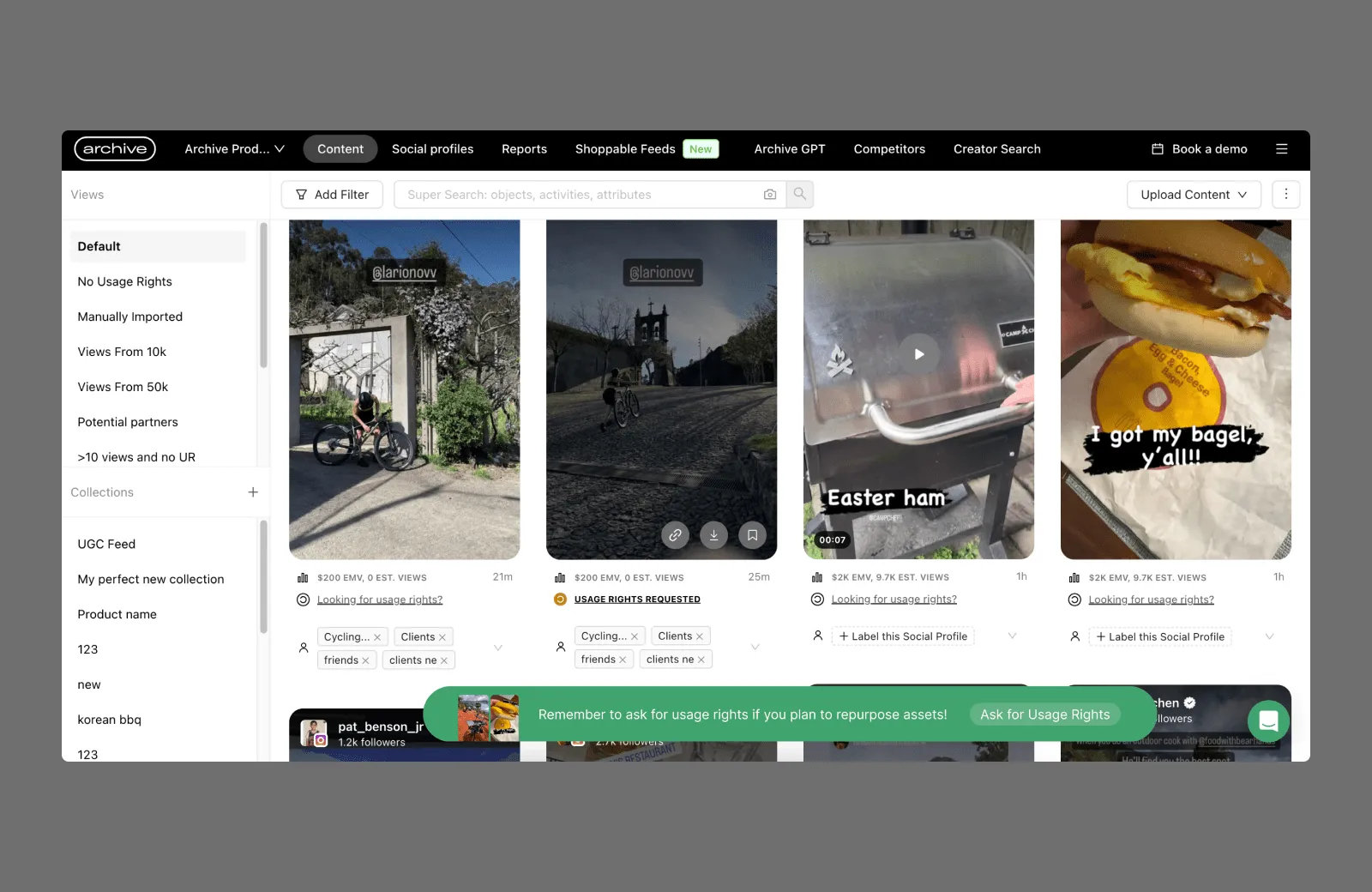
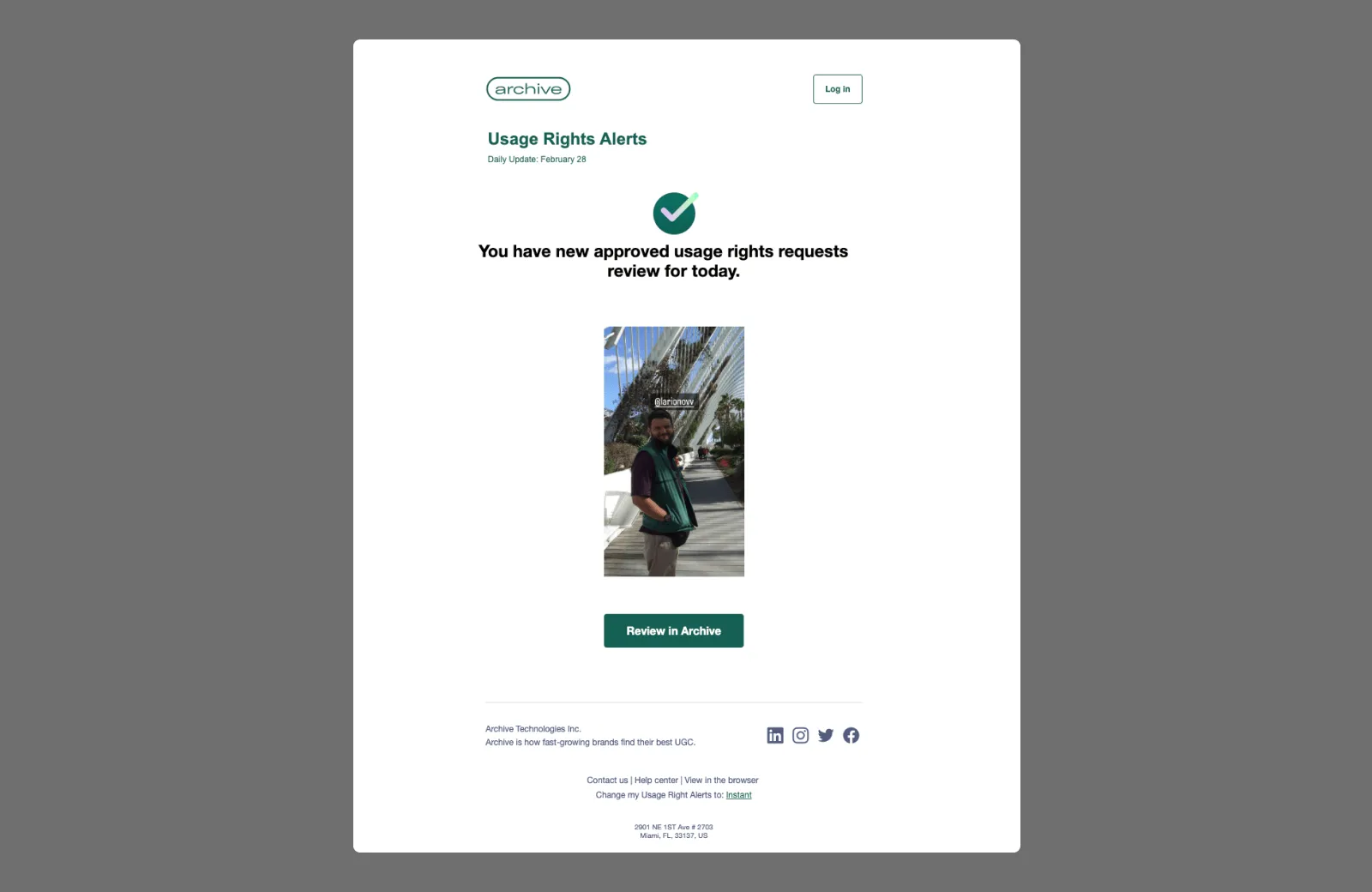
After the closed test, we launched the feature through a customer email and an in-app announcement.
We later limited the free plan to five requests and considered a separate Usage Rights plan. I left before we had enough data to evaluate the pricing experiment.
What I learned
A few companies liked the prototype but never used the feature. I had validated interest, but not urgency.
I would now ask more specific questions during discovery: How many requests do you send? How long does it take? What happens when approval is missing? Do you need to request more than you do today?
The main lesson: positive feedback on a prototype is not the same as a change in behavior. Keeping the first release small helped us learn that quickly.